

What do Centers for Independent Living do?
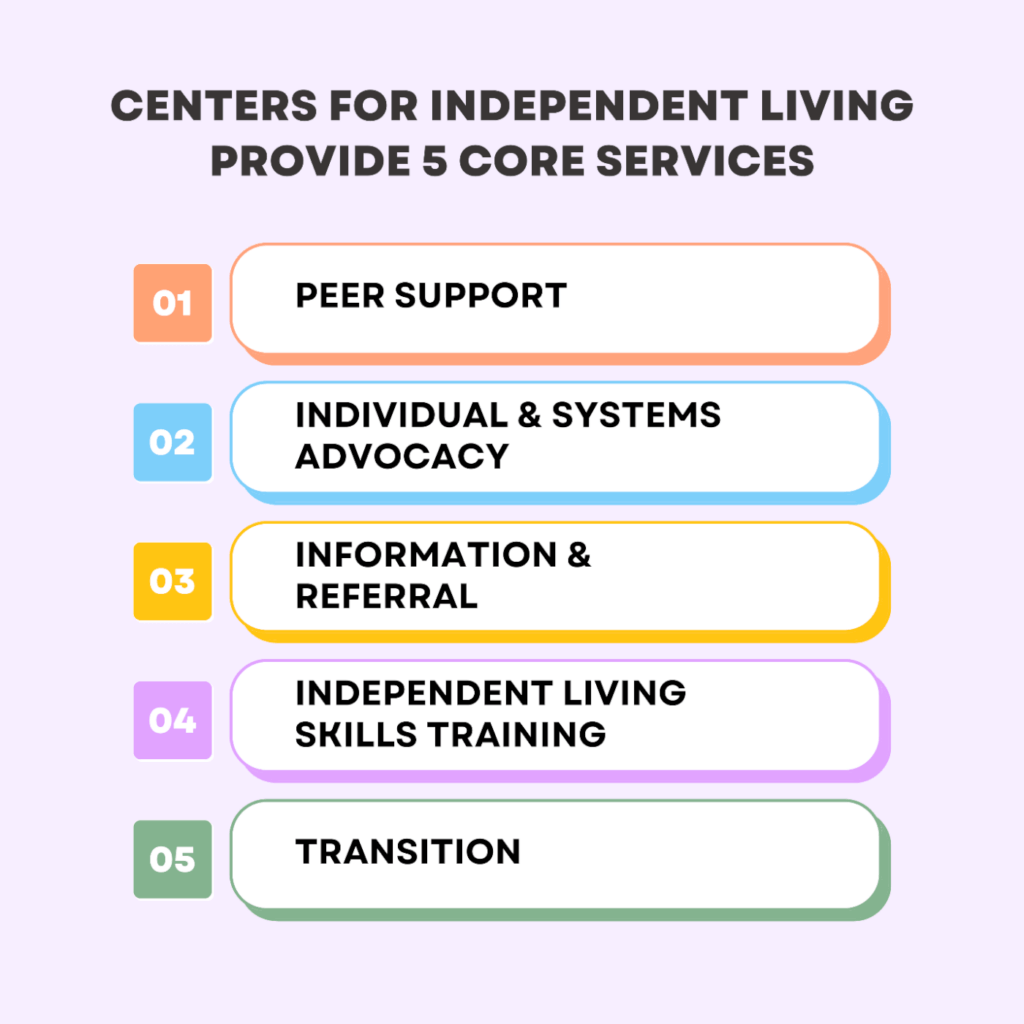
Centers for Independent Living (CILs) are community-based organizations that support people with disabilities in achieving greater independence and improving their quality of life. They offer a variety of services, including:
Individual Advocacy: CILs help individuals advocate for their rights and access services.
Systems Advocacy: CILs work to change rules, laws, and systems to help improve life for people with disabilities. Systems advocacy focuses on making lasting improvements by:
- Changing Policies: Pushing for new laws or changes to existing ones that make life better and fairer for everyone.
- Working Together: Disabled people work together to create long-lasting change in society.
- Raising Awareness: Educating others about the issues that affect disabled people, so more people understand and support the changes needed.
- Influencing Services: Talking to government agencies and organizations to help them provide better support and services for people who need them.
- Offering Solutions: CILs are able to offer unique solutions to persistent problems by listening to and prioritizing the perspective of people who have experienced those issues first-hand.
Peer Support: They provide a network for individuals with disabilities to share experiences and support one another.
Independent Living Skills Training: CILs offer training programs that teach skills for daily living, such as budgeting, cooking, and self-care.
Information and Referral Services: They connect individuals with resources and services in the community, including transportation, healthcare, and legal assistance.
Transition Services: CILs assist individuals transitioning from institutions to living in their communities. They also help youth with disabilities transition to adulthood.
Community Impact: CILs work to improve accessibility and inclusion in their communities through education, collaboration, outreach, and technical assistance.
Overall, CILs empower individuals with disabilities to be decision-makers in their own lives and participate fully in society.
What do Statewide Independent Living Councils do?
SILCs work collaboratively with Centers for Independent Living (CILs) and other stakeholders to develop a comprehensive State Plan for Independent Living. This plan outlines how independent living services will be provided statewide and is essential for the receipt of federal funding.
Some SILCs engage in other activities, such as public awareness and advocacy.
More Information
- What is Independent Living? from the Administration for Community Living
- Independent Living Fact Sheet (5 for 5 Campaign)
- Funding Fact Sheet (5 for 5 Campaign)
- Independent Living in Action (5 for 5 Campaign)
